
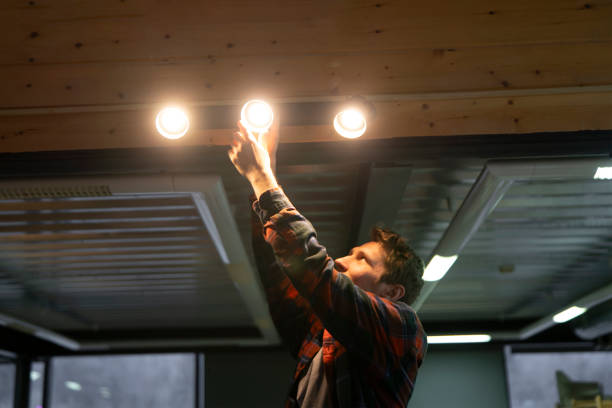
A floodlight snaps on as someone reaches the driveway. The yard becomes bright, yet the visitor’s face is hard to see. One corner stays dark. Meanwhile, the garage door reflects a sharp white glare. This common scene raises a useful question: how bright should outdoor security lights be around a home or business? More light doesn’t always mean better visibility. Good lighting reveals doors, paths, vehicles, faces, and movement without blinding people or cameras. Time On Target Pro Security provides LED lighting installation in Hudson FL for properties with different layouts and risks.
Our work includes motion sensors, security floodlights, backyard lighting, smart controls, and CCTV integration. Therefore, the right plan starts with the property, not a box label. Brightness matters, but placement, beam shape, mounting height, timing, and glare decide whether that light helps.
Why Bright Driveway Lights Still Miss A Face
Stand near a strong floodlight and look toward the dark side of a yard. Your eyes adjust to the brightest point. As a result, details beyond that point become harder to read. The same problem can affect outdoor security lighting when one fixture carries the whole job. A high number of security light lumens may create a bright patch, but it may leave deep shadows nearby.
The surface matters too. White siding, pale concrete, wet pavement, and glass can throw light back toward the viewer. Therefore, judge outdoor floodlight brightness from several viewing positions. Look from the street, doorway, camera, driveway, and property line. If a face disappears in glare or a walkway vanishes beside a hotspot, the system needs better balance. Several controlled fixtures often work better than one powerful lamp.
Walk The Property Before Picking Security Lighting
Imagine walking from the curb to the back door after dark. Every change in direction creates a new lighting need. Good outdoor security light placement follows that real route. It does not simply place a fixture wherever wiring is easiest. The walk should cover the following areas:
- Check gates, doors, windows, and other common entry points.
- Mark steps, changes in level, and narrow walkways.
- Find corners hidden by fences, plants, sheds, or parked vehicles.
- Note surfaces that may reflect light toward people or cameras.
- View nearby windows and property lines before aiming fixtures.
This night walk reveals gaps that daylight can hide. It shows where constant light is unnecessary. Therefore, useful outdoor lighting coverage comes from overlapping zones. Each zone has one job, while nearby fixtures support it. That approach reduces dark breaks without washing the whole property in light.
Why Lumens Alone Cannot Set Security Light Levels
People often search for how many lumens for outdoor security lighting, yet lumens measure output at the fixture. They do not show how much light reaches a face, path, or parking space. Lux and foot-candles measure light arriving on a surface. One foot-candle equals one lumen across one square foot. Therefore, distance, beam angle, height, and fixture direction change the result.
These ranges offer planning starting points, not fixed rules or code levels:
| Property area | Common starting range | Main design concern |
| Door or porch | 400-800 lumens | Clear faces without eye-level glare |
| Steps or short path | 100-300 lumens per fixture | Even light across walking surfaces |
| Driveway or small yard | 700-1,300 lumens | Beam spread and vehicle shadows |
| Large yard or perimeter | 1,500-3,000 total lumens | Several fixtures instead of one hotspot |
| Commercial parking or loading area | Site measurements required | Foot-candles, uniformity, traffic, and codes |
The best lumens for outdoor security lights depend on the actual target. A smaller, well-aimed fixture may outperform a brighter one pointed poorly.
How Mounting Height Changes Outdoor Security Lighting
Move the same fixture from eight feet to sixteen feet. The beam covers more ground, but less light reaches each part. That is why security light mounting height cannot be separated from output. A low fixture may create a sharp hotspot. A high fixture may spread light too thin or shine beyond the property.
Beam angle changes the pattern again. A narrow beam concentrates light on a gate or distant corner. A wide beam covers a patio or driveway but loses strength across that wider area. For homeowners comparing home security services in Hudson FL, this design step can prevent wasted light and missed areas. Fixtures need careful aiming after dark. Moreover, shielded outdoor light fixtures keep light below the fixture and toward the target. They can reduce glare, sky glow, and light entering nearby windows. The goal is useful ground light, not a glowing fixture.
How Security Cameras Read Brightness Differently
A person may see a bright entrance clearly while a camera records a white blur. Cameras react to contrast, angle, exposure, infrared light, and reflective surfaces. Therefore, security lighting for CCTV cameras needs testing through the live video feed, not only by eye.
What the Camera Needs
A camera needs even facial light near doors and gates. It needs enough contrast to separate a person from the background. Wide dynamic range can help with bright and dark areas in one frame. However, it cannot correct every badly aimed light.
What the Camera Does Not Need
It does not need a floodlight pointed into the lens. Nor does it need a bright wall filling half the view. Time On Target Pro Security integrates lighting with CCTV when the property requires both. After aiming, our team can check daytime, nighttime, motion, and entry views. Small angle changes often improve the image more than extra output.
Let Outdoor Security Lighting Respond To Activity
At 2 a.m., an empty side yard may not need full output. Yet a person approaching the gate may need immediate, clear light. Controls let the same fixture meet both needs. Motion sensor security lights can stay off or dim until activity enters a set zone. However, poor sensor direction may react to roads, branches, animals, or neighboring movement.
Useful control choices include:
- Aim motion detection across an approach path rather than far beyond it.
- Use timers where activity follows a regular business or household schedule.
- Set smart controls to lower output during quiet hours.
- Test remote commands without removing safe manual control.
Meanwhile, dusk-to-dawn security lights suit areas needing steady background visibility. A mixed system often works well. Low-level light can support orientation, while motion raises output near a gate or side door. The correct response depends on the area and the people using it.
Keep Security Lighting Focused On Its Intended Area
A floodlight can protect a side entrance while still disturbing a bedroom across the fence. Therefore, the plan must consider where every beam ends. To reduce outdoor lighting glare, the fixture should sit above normal sight lines and aim below the horizontal. Shields can block unwanted side light.
During a nighttime check:
- Stand at each door and look toward every fixture.
- Check whether light crosses the property line or reaches nearby windows.
- Look for sharp shadows beside vehicles, walls, and landscaping.
- Confirm that people can see the ground without staring into bare LEDs.
The color temperature for outdoor security lights affects comfort and contrast too. Cooler light can appear harsh at high output. Warmer light often feels calmer and limits blue-rich light. DarkSky recommends using only the needed level, keeping light on its target, and adding controls.
Why Parking Lot Lighting Needs Different Design
A delivery van enters a parking lot at closing time. Workers cross the lane, cameras watch the loading door, and emergency routes must remain clear. This setting needs more than a brighter residential fixture. Commercial security lighting must account for people, vehicles, hours, signs, cameras, access points, and property boundaries. Uniformity becomes important across a large site. A bright pole surrounded by dark gaps can slow recognition.
Therefore, designers compare the lowest and average light levels, not only the brightest reading. Vertical light matters near faces and cameras, while horizontal light supports walking and driving. Our LED lighting installation in Hudson, FL can include pathways, emergency lighting, security floodlights, smart controls, and remote operation. A commercial plan should review local rules and building needs before fixture selection. Larger areas may need a photometric layout showing expected readings across the site.
How Weather And Wiring Impact Security Lighting
The fixture looks right on installation day. Months later, rain has marked the lens, plants have grown into the beam, and a loose mount has shifted. Outdoor systems face water, heat, insects, dust, vibration, and changing landscaping. Therefore, LED security lighting still needs inspection even when the lamp has a long rated life. Time On Target Pro Security checks mounting, wiring, connections, aiming, sensors, and controls during lighting work.
Outdoor fixtures should carry a suitable weather rating for their location. Moreover, damaged seals or poor connections can shorten fixture life and create unsafe conditions. The Department of Energy compares exterior fixtures by lumens per watt, which shows light output for the energy used. It notes that controls can further cut operating costs. Therefore, energy-efficient outdoor lighting depends on both the fixture and its schedule.
Site Lighting Reviews Replace Guesswork With Data
A product package cannot see the oak beside the driveway, the camera over the garage, or the window across the fence. A site review can. It connects the desired view with fixture type, output, beam, height, wiring, controls, and property use. That process helps you avoid buying several fixtures that compete with each other. We have more than 15 years of industry experience in residential and commercial security work.
We operate under Florida license EF20002025. During LED lighting installation in Hudson, FL, our team can plan motion lights, floodlights, backyard lighting, remote controls, and CCTV connections. We can test how the finished lighting looks from the ground and through connected cameras. Good planning does not chase maximum output. Instead, it puts the right amount of light in the right place—measurements and nighttime testing show whether the plan works.
Signs Your Outdoor Security Lighting Is Dialed In
Walk the same route after the lighting is adjusted. The driveway is visible, but it no longer feels like a stage. The doorway shows a face without hiding the walkway. Cameras keep detail instead of recording a bright white patch. Meanwhile, the neighbor’s window stays dark. That result comes from balance. Lumens matter, yet they work with height, beam angle, spacing, surface color, controls, and camera position. A small porch needs a different plan from a parking area. Likewise, constant lighting and motion response solve different problems.
We help property owners connect those choices. Our team installs LED fixtures, sensors, smart controls, floodlights, pathway lights, emergency lighting, and CCTV-linked lighting. The goal is not the brightest property on the block. It is a property where people can see what matters, move safely, and understand what is happening after dark. Call Time On Target Pro Security at (727) 339-8577 for outdoor lighting help. Visit 18840 Sakera Rd, Hudson, FL 34667, to plan balanced lighting for your home or business today.
Frequently Asked Questions
How many lumens should an outdoor security light produce?
Most residential security lights produce 700 to 2,000 lumens. However, the right output depends on the area being covered. A porch or doorway may need 400 to 800 lumens. A driveway or larger yard may need more light spread across several fixtures. Lumens describe total light output, but they do not show how much light reaches the ground. Mounting height, beam angle, distance, surface color, and nearby lights change the visible result. So owners shouldn’t choose a fixture based on lumens alone. Start with the area, viewing distance, and security purpose. After installation, check the light from doors, cameras, walkways, and the property line. Adjust its angle or output if glare or dark gaps remain.
Does a brighter security light always provide better visibility?
No, a brighter security light does not always make an area easier to see. Excessive output can create glare, reflections, and sharp contrast between bright and dark spaces. Human eyes adjust to the brightest point in view. As a result, shadows may appear deeper and hide movement. A bare LED aimed toward a doorway can make faces harder to recognize. Bright light may reflect from white walls, glass, wet pavement, or vehicle surfaces. Therefore, even coverage matters more than maximum output. Several lower-output fixtures can cover a property more clearly than one powerful floodlight. Once owners choose a lumen range, they should review spacing, aiming, shielding, and dimming. A nighttime walk can reveal whether extra brightness helps or reduces visibility.
How do mounting height and beam angle affect lighting coverage?
Mounting height and beam angle control how widely light spreads and how strongly it reaches the target. A higher fixture covers more ground, but the light becomes weaker across that area. A lower fixture creates light nearby, yet it may produce a small hotspot or eye-level glare. Beam angle changes that pattern. A narrow beam concentrates output on a gate, door, or distant corner. A wide beam covers a patio, driveway, or yard but spreads the lumens more thinly. Therefore, select fixture output based on its height and beam. Installers should aim each fixture after dark. They should check the ground, faces, nearby windows, and property boundaries. Small angle changes can improve coverage without increasing total output.
Can outdoor security lights be too bright for security cameras?
Yes, lights can be too bright for security cameras and reduce detail. A floodlight aimed toward the lens may create a patch, glare, or reflected light. Faces can appear washed out near the fixture while the background remains dark. Wide dynamic range may help a camera balance contrast, but it cannot correct every lighting mistake. Infrared cameras may react differently when lighting switches on. Therefore, test the fixture and camera together after dark. Review live and recorded footage while someone walks toward doors, gates, vehicles, and other key areas. Check facial detail at distances. If the image loses detail, adjust the light angle, lower its output, move the fixture, or change the camera view before adding more light.
Are motion-sensor lights better than dusk-to-dawn security lights?
Neither control is better because motion and dusk-to-dawn lights serve different needs. Motion sensors activate or raise lighting when movement enters a set area. This response can reduce energy use and draw attention to activity. However, poor sensor placement may trigger on branches, roads, animals, or property. Dusk-to-dawn lights provide steady visibility from evening until daylight. They may suit entrances, walkways, parking areas, or places where people need orientation. After deciding on coverage, owners can combine both controls. Low-level lighting may remain on throughout the night, while motion raises the output near gates or side doors. Timers and smart controls can reduce unnecessary use during quiet hours. Test each control for detection range, timing, brightness, and manual operation.
How can outdoor lighting cover dark areas without causing glare?
Outdoor lighting can cover areas without glare by using several aimed and shielded fixtures. Begin by marking doors, paths, corners, gates, vehicles, and landscaping that block light. Place fixtures above sight lines and point them below the horizontal. Shields can keep light away from windows, roads, and properties. Overlapping beams help fill dark gaps without creating one harsh hotspot. However, fixtures should not point toward the same center. Their light should meet across the area. After choosing controls, conduct a nighttime check from every viewing position. Look from the street, entrance, driveway, camera, and property line. If bare LEDs remain visible or shadows look deeper, reduce output, change the angle, add shielding, or adjust fixture spacing before accepting the setup.
How should property owners plan security lighting in Hudson, FL?
Property owners in Hudson should begin with a nighttime review of the site. Mark entrances, driveways, walkways, gates, dark corners, cameras, reflective walls, and nearby windows. Florida rain, heat, humidity, and exposure should influence fixture choice, mounting, wiring, and weather ratings. Owners should still consider business hours, household routines, vehicle movement, neighbors, and property boundaries. Time On Target Pro Security can connect these conditions with output, beam angles, sensors, controls, and camera views. Once fixtures are selected, test the lighting after dark rather than judging it in daylight. Review faces, walking surfaces, video, and light crossing the property line. Confirm local rules and building needs before work begins for commercial sites, parking areas, and emergency routes.
Who provides LED security lighting installation in Hudson, FL?
Time On Target Pro Security provides LED lighting for homes and businesses in Hudson. Its services include motion-sensor lights, security floodlights, backyard lighting, pathway lighting, emergency lighting, smart controls, remote operation, and CCTV integration. The team can review fixture output, mounting height, beam angle, wiring, sensor range, camera views, and property conditions. This planning helps place light where people need visibility while limiting glare and dark gaps. The company brings more than 15 years of industry experience and operates under Florida license EF20002025. Property owners seeking LED lighting installation in Hudson, FL, can request a fixture assessment or a new layout. Nighttime testing can confirm useful coverage before final angles, sensor settings, and control schedules are accepted.